Choosing between LCL (Less than Container Load) and FCL (Full Container Load) is one of the first decisions when shipping by sea freight. This guide compares the two to help you make the right choice.
Quick Comparison
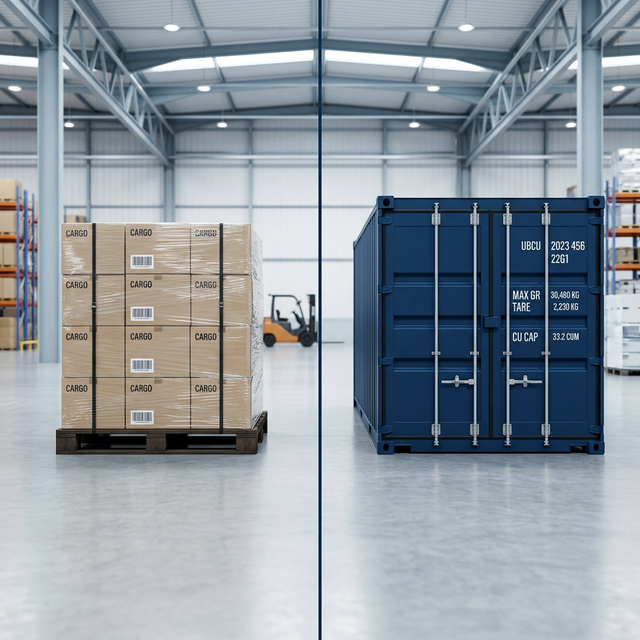
| Factor | LCL | FCL |
|---|---|---|
| Volume | Under ~15 CBM | 15+ CBM (fills a container) |
| Cost basis | Per CBM | Per container |
| Transit time | Longer (consolidation delays) | Faster (direct loading) |
| Handling | Multiple touches | Sealed at origin |
| Damage risk | Higher (shared container) | Lower (exclusive use) |
| Best for | Small shipments | Large shipments |
What is LCL?
Less than Container Load means your cargo shares a container with other shippers' goods. A consolidator combines multiple small shipments into one container.
LCL is ideal when:
- Your cargo is under 15 CBM
- You're a small importer or starting out
- You don't have enough goods to fill a container
- You need flexibility for irregular shipments
LCL costs are calculated per cubic metre (CBM). Typical rates from China to Durban: R800-R1,500 per CBM depending on the route and season.
What is FCL?
Full Container Load means you get an entire container exclusively for your goods. Common container sizes:
| Container | Internal Volume | Max Weight |
|---|---|---|
| 20ft Standard | 33 CBM | 28,000 kg |
| 40ft Standard | 67 CBM | 26,500 kg |
| 40ft High Cube | 76 CBM | 26,300 kg |
FCL is ideal when:
- Your cargo exceeds 15 CBM
- You need faster transit times
- You're shipping fragile or high-value goods
- You want reduced handling and damage risk
FCL costs are per container. Rates from China to Durban: R15,000-R35,000 for a 20ft, R25,000-R55,000 for a 40ft (rates vary significantly by season).
The Crossover Point
The key question: At what volume is FCL cheaper than LCL?
Generally, if your cargo exceeds 12-15 CBM, FCL becomes more cost-effective than LCL. Here's why:
- 15 CBM × R1,200/CBM (LCL) = R18,000
- 20ft container (FCL) = ~R20,000
- But FCL is faster, safer, and has fewer handling charges
At 15+ CBM, always get quotes for both LCL and FCL from V & S Freight to compare total landed costs.
Which Should You Choose?
Choose LCL if:
- ✅ Shipping less than 12 CBM
- ✅ Budget is tight and you don't fill a container
- ✅ You can wait a few extra days
- ✅ Goods are durable and packaged well
Choose FCL if:
- ✅ Shipping more than 15 CBM
- ✅ Time-sensitive delivery
- ✅ Fragile, valuable, or sensitive goods
- ✅ You want your container sealed at origin