Dangerous goods (DG) — also called hazardous materials — require special handling, packaging, documentation, and labelling when shipped by air, sea, or road. Failure to comply with DG regulations can result in fines, cargo rejection, and criminal prosecution.
What Are Dangerous Goods?
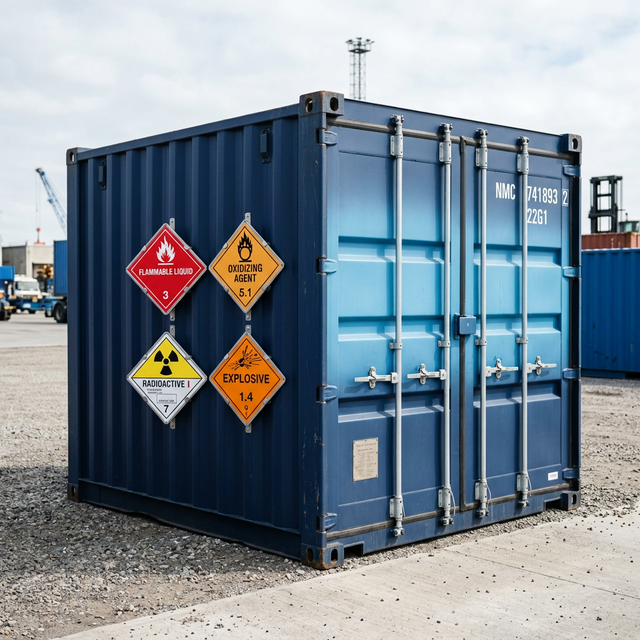
Dangerous goods are substances or articles that pose a risk to health, safety, property, or the environment during transport. They are classified into 9 classes by the United Nations:
| Class | Description | Examples |
|---|---|---|
| 1 | Explosives | Fireworks, ammunition, detonators |
| 2 | Gases | LPG, aerosols, fire extinguishers |
| 3 | Flammable liquids | Paints, adhesives, perfumes, solvents |
| 4 | Flammable solids | Matches, metal powders, activated carbon |
| 5 | Oxidising substances | Hydrogen peroxide, bleach, fertilisers |
| 6 | Toxic/Infectious substances | Pesticides, medical specimens |
| 7 | Radioactive material | Medical isotopes, smoke detectors |
| 8 | Corrosives | Batteries, acid, cleaning chemicals |
| 9 | Miscellaneous | Lithium batteries, dry ice, magnetised material |
Key Regulations
Sea Freight — IMDG Code
The International Maritime Dangerous Goods (IMDG) Code governs DG by sea. All DG containers must:
- Be packed and labelled per IMDG specifications
- Have a DG declaration signed by the shipper
- Be stowed according to segregation requirements
- Be declared to the shipping line before booking
Air Freight — IATA DGR
The IATA Dangerous Goods Regulations are stricter than sea freight. Many DG substances are prohibited on aircraft. Those permitted require:
- Specialist DG packaging
- Shippers' Declaration for Dangerous Goods
- Shipper and packer DG training certification
- Specific labelling and marking
Road Freight — SANS 10228/10229
South African National Standards govern road transport of DG:
- HAZCHEM placarding on vehicles
- Emergency information panels
- Driver must have DG licence (ADR equivalent)
- Route restrictions in some areas
Documentation Required
- ✅ Dangerous Goods Declaration (IMO form or IATA DGD)
- ✅ Safety Data Sheet (SDS/MSDS) for each product
- ✅ Proper shipping name and UN number
- ✅ Commercial invoice with DG classification
- ✅ Emergency contact information
- ✅ Customs clearance documentation
Common DG Shipped From/To South Africa
- Mining chemicals — cyanide, explosives, acids
- Automotive — batteries (lithium, lead-acid), airbag inflators
- Agricultural — pesticides, fertilisers
- Pharmaceutical — certain chemical compounds
- Electronics — lithium batteries (Class 9)
- General — paints, adhesives, cleaning chemicals, perfumes
V & S Freight's DG Capabilities
We handle dangerous goods shipments with full regulatory compliance. Our clearing team ensures correct classification, documentation, and customs clearance.