Importing a vehicle into South Africa involves specific regulations, duties, and procedures. Whether you're bringing in a personal vehicle, a classic car, or importing commercially, this guide covers everything you need to know.
Can You Import a Car Into South Africa?
Yes, but with restrictions:
- New vehicles — Require an ITAC import permit and NRCS Letter of Authority (LOA)
- Used vehicles — Heavily restricted; only returning residents and permanent residency holders generally qualify for an ITAC permit
- Returning residents — Can import their personal vehicle under rebate provisions (must have owned it for at least 12 months)
- Immigrants with permanent residency — Can import a vehicle registered in their name
- Classic/vintage cars — Specific permit categories
Important: Imported used vehicles generally cannot be sold or disposed of for at least 2 years from the date of importation.
Step 1: Check Eligibility & Get an Import Permit
Before anything else, determine if your vehicle qualifies:
- Apply to ITAC (International Trade Administration Commission) for an import permit
- Obtain an NRCS Letter of Authority (LOA) to confirm safety and environmental compliance
- Processing time: 4-8 weeks for ITAC; NRCS may vary
- You'll need the vehicle details (VIN, make, model, year, engine specs)
Important: Without both an ITAC permit and NRCS LOA, your vehicle will not be cleared through customs.
Step 2: Shipping Methods
RoRo (Roll-on Roll-off)
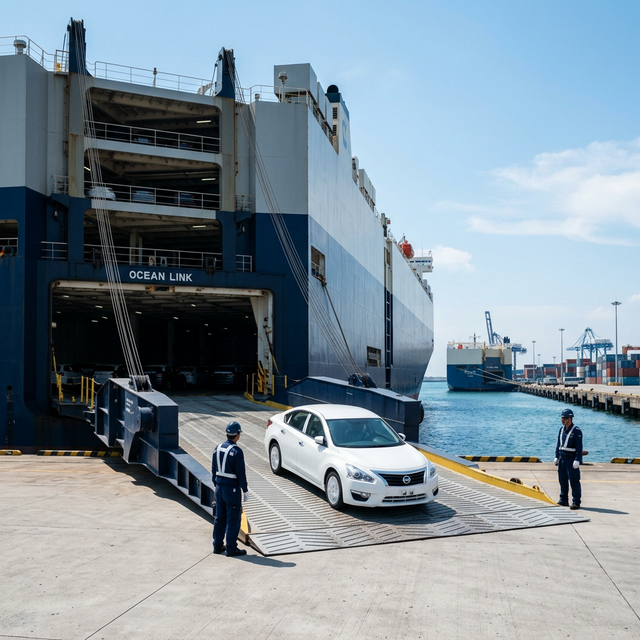
The vehicle is driven onto a specialized vessel. This is the most common and affordable method.
- Cost: R15,000-R40,000 from Europe, R25,000-R50,000 from USA
- Transit: 3-6 weeks depending on origin
- Best for: Running, driveable vehicles
Container Shipping
Vehicle is loaded into a 20ft or 40ft container.
- Cost: More expensive than RoRo (container cost applies)
- Transit: Similar to RoRo
- Best for: High-value vehicles, non-running cars, or shipping personal effects alongside
Learn more about car shipping options →
Step 3: Documentation Required
- ✅ ITAC import permit
- ✅ Original title/registration document from origin country
- ✅ Commercial invoice or proof of value
- ✅ Bill of lading
- ✅ Police clearance certificate (proving vehicle isn't stolen)
- ✅ Compliance certificate (from an accredited testing station in SA)
- ✅ Passport and SA ID
Step 4: Customs Clearance
Your clearing agent (V & S Freight) handles:
- Submission of customs entry to SARS
- HS code classification (Chapter 87 for vehicles)
- Duty calculation and payment
- Release from port
Import Duties on Vehicles
| Vehicle Type | Customs Duty | Ad Valorem |
|---|---|---|
| Passenger cars | 25% | 0-30% based on value |
| Light commercial | 25% | Varies |
| Trucks/Heavy | 0-20% | Varies |
| Motorcycles | 25% | 5% ad valorem excise |
Plus 15% Import VAT calculated on the Added Tax Value (ATV) — see VAT on imports for full calculation.
Example: A car valued at R500,000:
- Customs duty (25%): R125,000
- Ad valorem (e.g., 20%): R100,000
- VAT (15% on R725,000): R108,750
- Total duties: ~R333,750
Vehicle imports are expensive — factor this into your decision.
Step 5: Compliance Testing
After clearance, the vehicle must pass a SABS/NRCS compliance test at an accredited testing station:
- Headlight alignment (left-hand drive conversion if applicable)
- Emissions testing
- Safety inspection
- Speedometer calibration (km/h)
Cost: R5,000-R15,000 depending on modifications needed.
Step 6: Registration
Once compliant, register the vehicle with your provincial licensing department:
- Compliance certificate
- Customs release documents
- Proof of identity and address
- Registration fees
Common Mistakes
- Not getting an ITAC permit first — Vehicle will be stuck at port
- Underestimating costs — Duties alone can be 50%+ of the vehicle's value
- Left-hand drive vehicles — Must be converted to right-hand drive
- Not budgeting for compliance — Testing and modifications are mandatory